A new model for industrial biotechnology
We use fermentation and synthetic biology to make ingredients that work for the value chain, for consumers and for the planet. We build them on a business designed to be profitable.
-
The way the world eats and farms is changing.
Diet: people want more protein, less alcohol and less sugar.
Climate: farming and agriculture are under growing pressure from a changing climate.
These shifts create demand for new ingredients, and for familiar ones made in better ways. Fermentation and synthetic biology can meet that demand with products that are both economical to make and good for people and the planet.
-
Mycofeast makes a diverse range of products through low-cost fermentation, built on expert strain engineering.
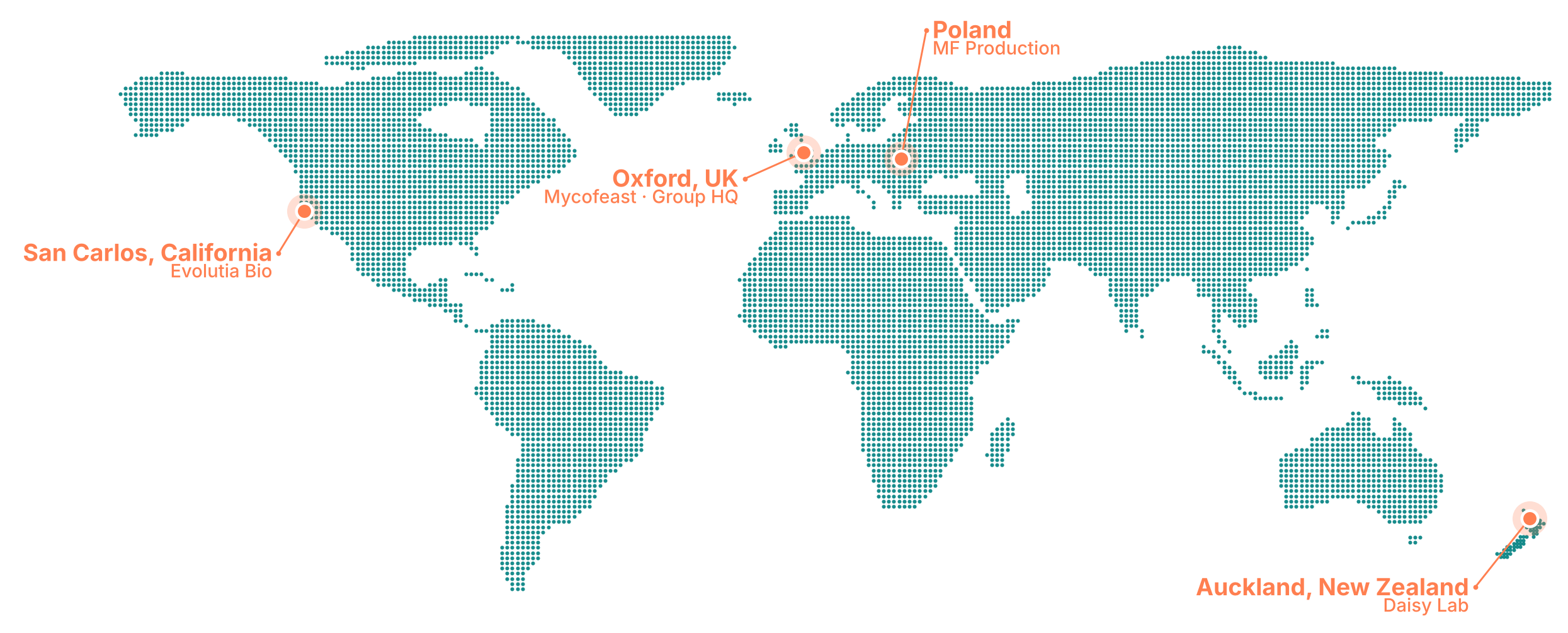
Vertically integrated. Discovery, strain engineering, scale-up and manufacturing sit in one group, anchored by our own industrial facility in Poland. Fewer handovers mean faster decisions and better economics.
Built for profitability. We focus on products with a clear route to revenue, and we invest in long-term capability alongside them. We are building for decades, not funding rounds.
Independent. We are not driven by venture capital cycles, so we can make decisions on the merits of the science and the market.
-
In industrial biotechnology, scientific promise does not always translate to commercial success. We pursue a diversified portfolio of focused, high-quality programmes across beverages, food and feed. We slelect opportunities at the intersection of bological feasibility, product performance, and attractive economics.
We evaluate each program against clear technical and commercial citeria and only advance those that demonstrate clear viability. We progressively concentrate resources into those with greatest potential.
Our ambition is to compete with established ingredient suppliers on quality, performance, and cost, while opening new markets where biotechnology enables better products or new applications.
-
Our growth is driven by our proprietary R&D platform, combinding strain engineering, process developmand and fermentation at scale.
We complement these capabilities with two strategic approaches:
In-licensing: bringing in promising strains and technologies from outside the group.
Acquiring: adding complementary technologies, along with people or assets that strengthen the platform.